
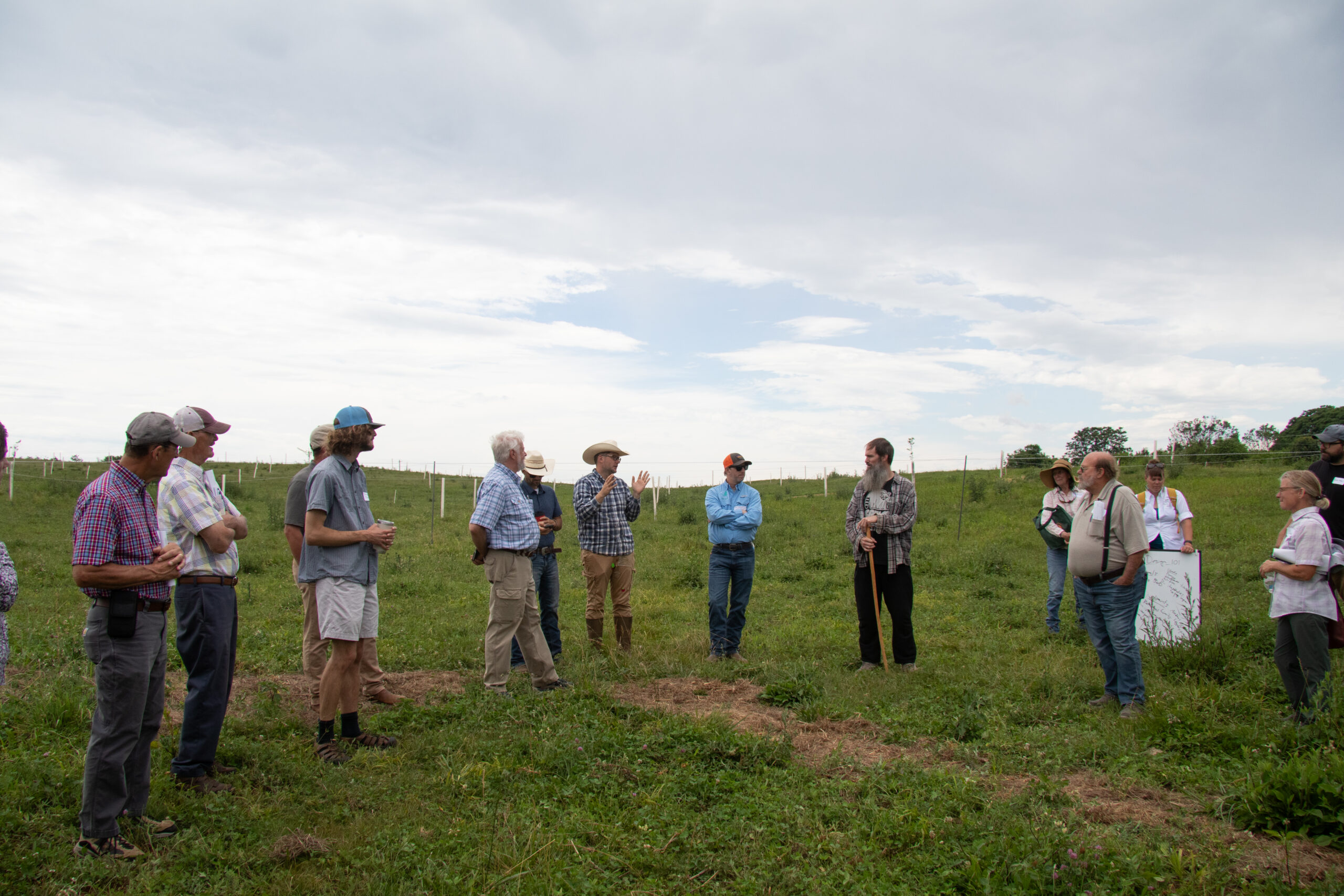
This past June, Friends of the Rappahannock (FOR) joined forces with Appalachian Sustainable Development (ASD), the Virginia Department of Forestry (DOF), and the York River Steward to host an intensive, four-day silvopasture training series. Additional expertise came from Trees for Graziers (TFG), Virginia Tech (VT), Virginia Cooperative Extension (VCE), and several Soil and Water Conservation Districts (SWCDs). From June 15th to 18th, we brought together natural resource professionals and local landowners to explore how “the intentional integration of trees, forage, and livestock” can transform farm productivity and watershed health.
Why Silvopasture Matters to Our Rivers
For FOR and YRS, silvopasture is more than just a farming technique; it is a tool for restoring the Rappahannock and York Rivers. While our high-priority riparian buffers protect the immediate banks of our waterways, our “Trees for Shade” silvopasture program extends these benefits directly into active livestock pastures. By integrating native trees into grazing areas, we create habitat corridors that allow wildlife to move safely across the landscape while simultaneously filtering nutrients and sediment before they ever reach our streams. Meanwhile, these trees can also benefit livestock by providing shade, windbreaks, forage, and fodder.
A Week of Deep Dives and Design
The training series was structured to move participants from core concepts to applied design:
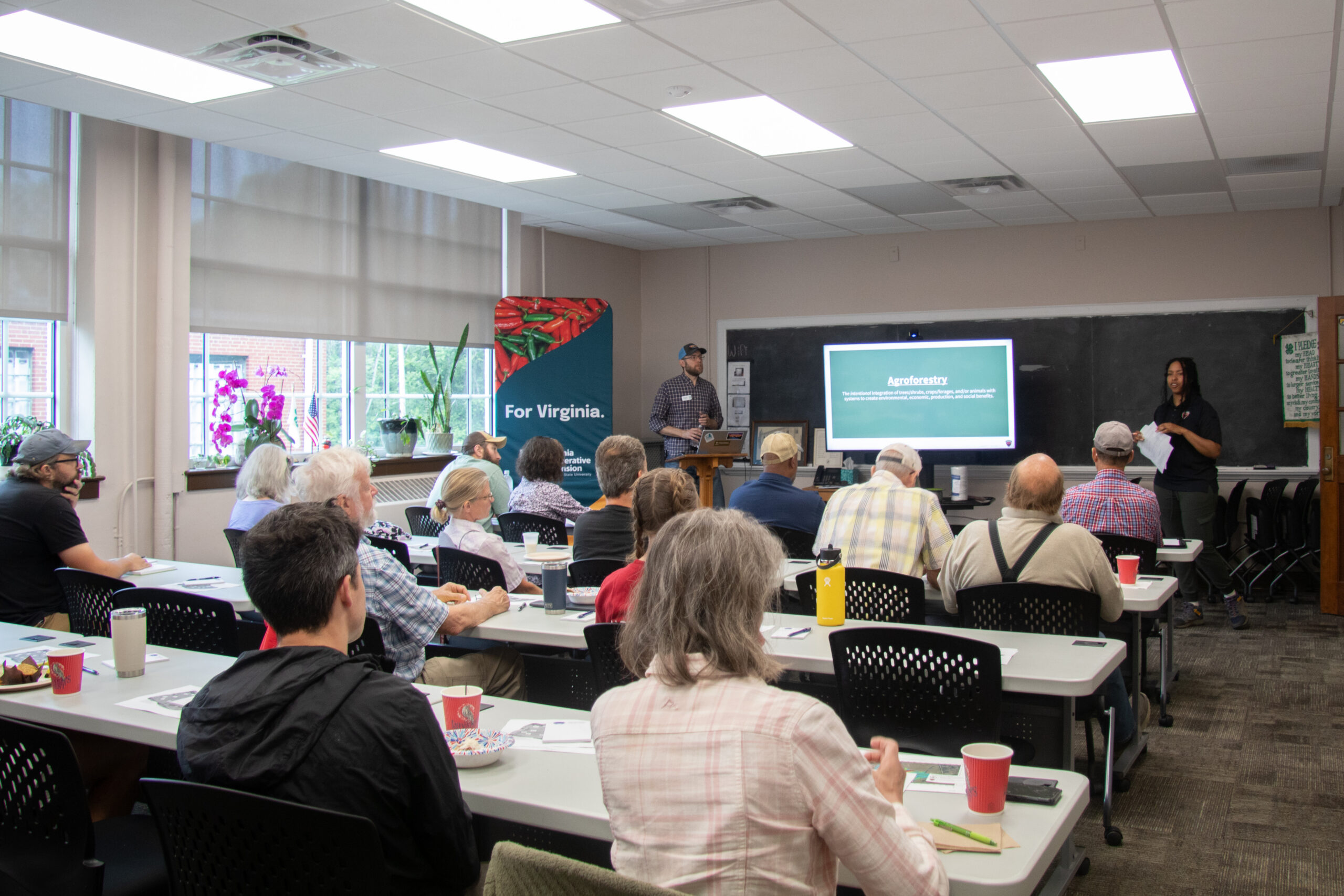
- 100-Level Silvopasture Fundamentals: We kicked off the week with a foundational course for natural resource professionals and agriculture advisors, blending classroom learning with hands-on site assessments at Wildwood Farm in Barboursville, VA.
- 200-Level Silvopasture Design Intensive: This advanced session, held at the George Washington Carver Agricultural Research Center and Val Verde Farm in Culpeper, VA, focused on real-world implementation. Participants engaged in collaborative design work, using management principles to develop preliminary plans for working landscapes.
- Landowner and Producer Workshop: The series concluded with a day dedicated to the people on the front lines of land management. Producers learned how adding trees can reduce livestock heat stress, improve net forage productivity, and diversify farm income through “nutrient-dense fruits, leaves, pods, seeds, nuts, and timber.”
Seeing Success in the Field: Val Verde & Wildwood Farm
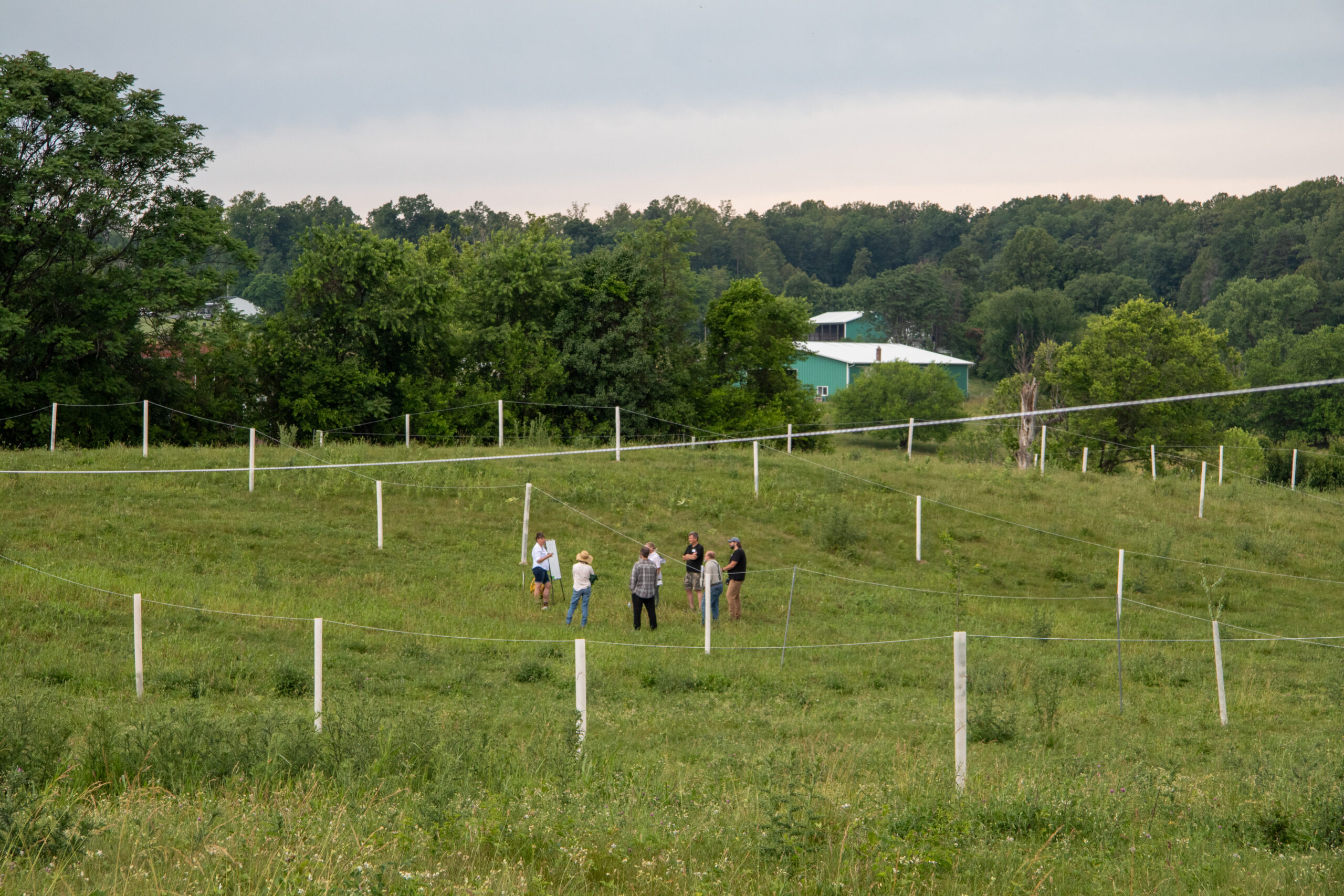
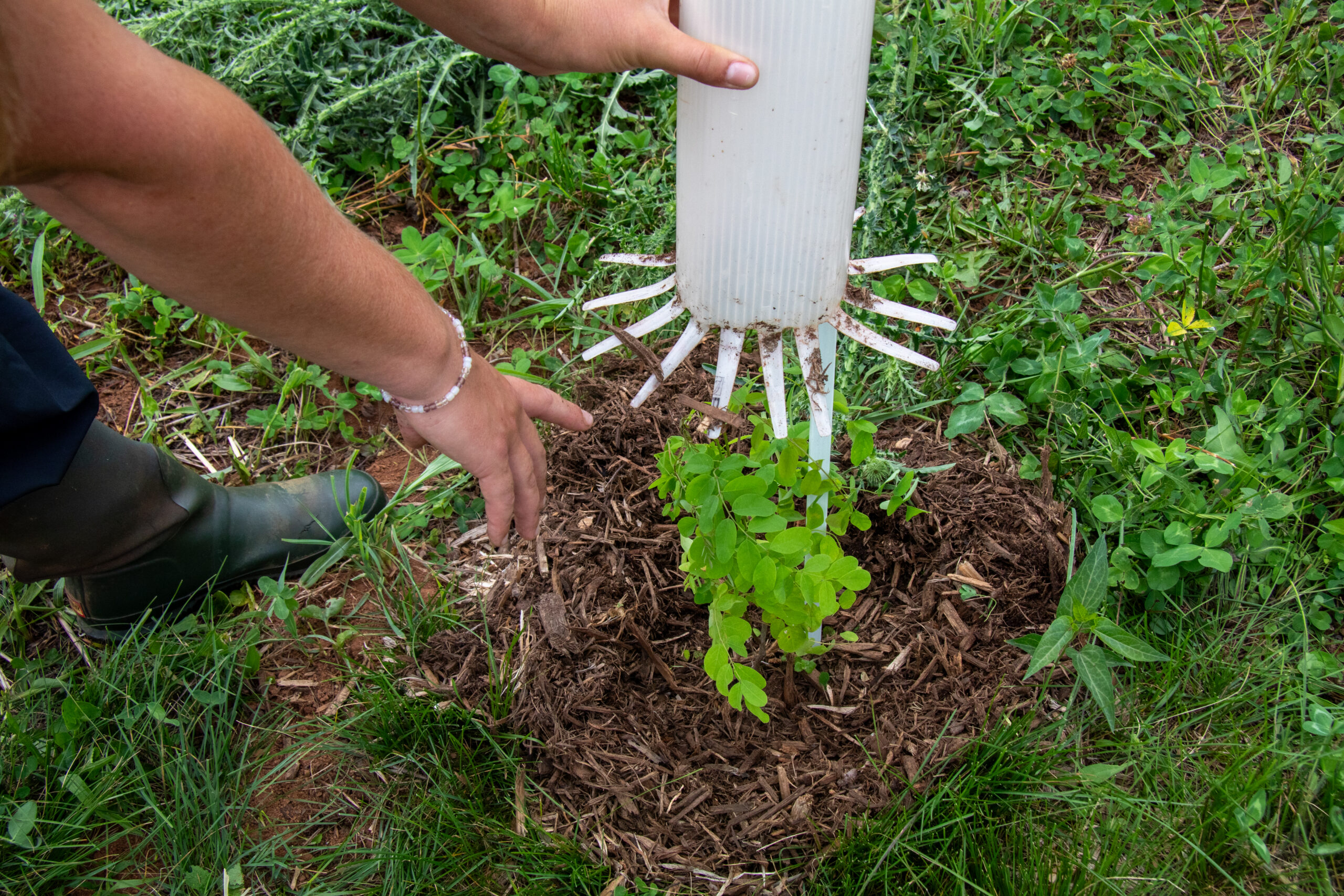
The highlight of the week was the opportunity to visit two very different family-owned silvopasture operations at Wildwood and Val Verde farms. Wildwood features a large thinned pine pasture, where successive thinnings over multiple decades have transformed a dense loblolly pine stand into productive silvopasture with ample shade–a key part of Wildwood’s rotational grazing system. Val Verde, a participant in FOR’s Trees for Shade program, was recently planted with a diverse mix of productive hardwood species, including honey locust, black locust, mulberry, and black walnut. At Val Verde, newly planted trees are protected by 6’ tall tree tubes and electrified polywire. This setup allows cows to continue grazing the silvopasture field while the trees establish. These systems provided a firsthand look at how agroforestry practices can improve soil health and animal performance in a variety of contexts.
Join the Movement
Equipping technical assistance providers with the skills to identify and implement silvopasture ensures that more landowners can access the benefits of trees on working lands. Our goal is to expand awareness of silvopasture’s potential across Virginia, making our farms more resilient to climatic extremes while protecting our water.
Ready to bring shade and sustainability to your land? If you are a producer in the Rappahannock or York River watersheds, we want to hear from you. Check out our Trees for Shade Interest Form to see if you qualify for a free silvopasture installation or other financial and technical assistance.
This program was made possible by funding from the Edwards Mother Earth Foundation, an NRCS Conservation Innovation Grant, and the NFWF Chesapeake Bay Stewardship Fund.
Photo credit: Silvopasture-Workshop, Val Verde Farm in Culpeper: Ashley Falat, 2026-06-18